By Japper team
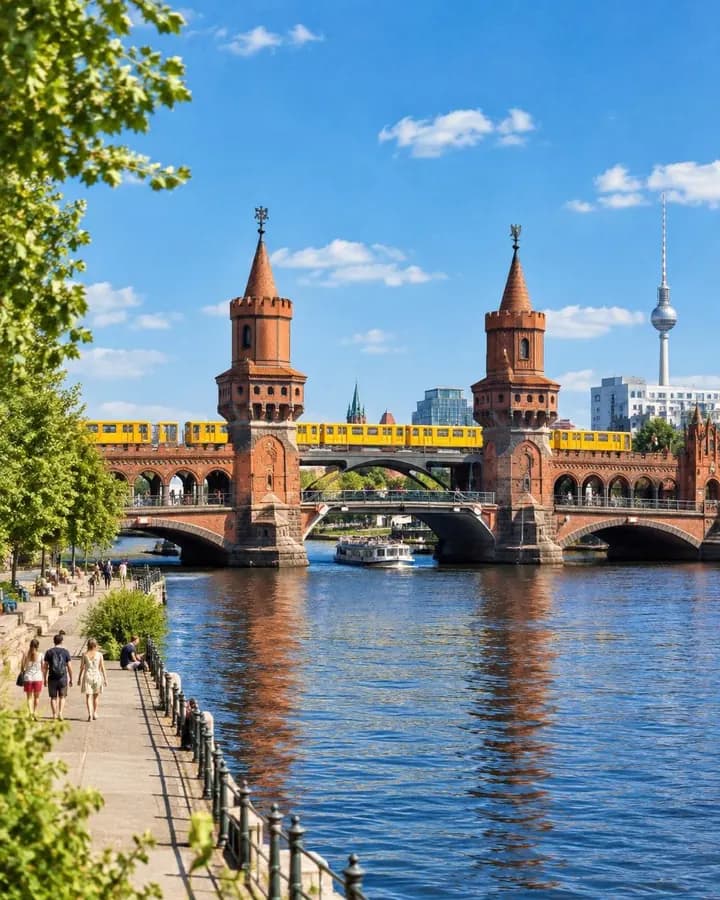
Germany's Opportunity Card (Chancenkarte) lets you enter Germany for up to a year to look for a job, without a job offer first. It sounds like the perfect japa ticket, and for some Nigerians it is. For others, it is an expensive year of searching in a language they do not speak yet.
The short answer
The Opportunity Card works best for Nigerians who already have three things: a degree or a vocational qualification of at least two years, some German (or very strong English plus real work experience), and around €13,092 to show for a year of living costs. At the Central Bank of Nigeria's official rate on 22 October 2026 (₦1,505.85 to €1), that is about ₦19.7m.
If you have the qualification and the money, the points are often reachable. If you do not have the money, this card is not your route yet. Look at a job-first route such as the Skilled Worker visa or the EU Blue Card instead.
Two ways to qualify
Route 1: fully recognised skilled worker. If your qualification has already been fully recognised as equivalent in Germany, you qualify without the points system. You still need to show you can support yourself.
Route 2: the points system. This is the route most Nigerians will use. According to the Federal Employment Agency and the German missions, you need:
- a university degree or a vocational qualification of at least two years, recognised in the country where you got it (for most readers, Nigeria)
- German at A1 or above, or English at B2 or above
- at least 6 points
For a degree, you show recognition with a positive anabin result or a Statement of Comparability from the ZAB, Germany's central office for foreign education. Anerkennung in Deutschland explains that a degree counts as comparable when the university is in anabin rated H+ or H+/- and the degree matches a German one. If your university is not listed, you apply to the ZAB. That costs €208 (about ₦313,000 at the rate above) and takes up to three months once your file is complete.
The points, line by line
These are the points as listed by the Federal Employment Agency in 2026:
| Criterion | Points |
|---|---|
| Qualification partially recognised in Germany | 4 |
| German at B2 | 3 |
| German at B1 | 2 |
| German at A2 | 1 |
| English at C1 | 1 |
| At least 5 years' work experience (in the last 7 years) | 3 |
| At least 2 years' work experience (in the last 5 years) | 2 |
| Qualification in a shortage occupation | 1 |
| Under 35 | 2 |
| Aged 35 to 40 | 1 |
| At least 6 months' legal stay in Germany before | 1 |
| Spouse or partner also eligible and applying | 1 |
Only your highest German level counts. Work experience must relate to your qualification and come after you qualified. The age points depend on your age on the day you apply. Language certificates must come from providers certified by ALTE, such as the Goethe-Institut, and the German Embassy in Nairobi, for example, says the certificate must not be more than 12 months old when you apply.
Two illustrative examples:
- Amaka, 29, software tester in Lagos. BSc from a university rated H+ in anabin, four years' experience since graduating, Goethe B1 certificate. Age 2, experience 2, German B1 2. That is 6 points. She qualifies.
- Tunde, 41, accountant in Abuja. HND, six years' experience, IELTS at B2 but no German. Experience 3, age 0, English B2 earns nothing because it is only the minimum. That is 3 points. Unless he gets partial recognition (4 points) or reaches German B1, he does not qualify.
What it costs
| Item | Euros | Naira (CBN, 22 Oct 2026) |
|---|---|---|
| National visa fee | €75 | about ₦113,000 |
| ZAB Statement of Comparability (if needed) | €208 | about ₦313,000 |
| Living costs per month | €1,091 | about ₦1.64m |
| Living costs for 12 months | €13,092 | about ₦19.7m |
The living costs figure is the 2026 amount from the Federal Employment Agency. You can show it with a blocked account or a formal declaration of commitment from someone in Germany, and the German Embassy in London also lists a part-time work contract paying at least €1,091 net a month as an option. You also need health insurance comparable to German statutory cover. Add language exams, translations and your flight, which we have not priced here because they vary.
What you can actually do in Germany
The card is issued for up to one year. During that year you can:
- work part-time for up to 20 hours a week on average
- do trial work of up to two weeks with an employer, if it is aimed at a qualified job, vocational training or recognition
Once you find a qualified job, the aim is to switch to a work permit such as the EU Blue Card or the skilled worker permit. If you do not meet those rules, the Federal Employment Agency says a follow-up Opportunity Card can be granted for up to two years for qualified work. Helper jobs do not count. You cannot simply renew the job-search card back to back: you must first spend at least as long outside Germany as your previous stay.
Applying from Nigeria
The German Missions in Nigeria list the Opportunity Card among the visas you apply for online through the Consular Services Portal. You fill in the form and upload documents, the mission tells you if they are complete, and then you get a link to book an appointment. At the appointment they check your originals, hold a short interview, take biometrics and collect the fee.
The Consulate General in Lagos says booking is free of charge and that it does not encourage booking through agencies or other paid third parties. Misuse can get the applicant blocked. So anyone selling you a "Lagos slot" is a red flag. Read our fake agent guide before paying anybody.
The June 2026 checklist asks for, among other things, a CV, a motivation letter, proof of recent job searches in Germany, the blocked account or declaration of commitment, your birth certificate, and school results in order from primary school through WAEC to your degree. Originals and black and white copies, unstapled.
Our honest verdict
It works for you if you are under 35, have a recognised degree and two or more years of related experience, are already learning German, and can fund a year without borrowing money you cannot repay. In that position, a year of focused searching in Germany is a real option.
It does not work for you if you are relying on English alone, have no savings, or are hoping to pick up any job once you land. Helper jobs do not lead to the follow-up card, 20 hours a week of part-time work is not a plan for paying rent, and without German your pool of employers is much smaller. If e no clear whether your degree is recognised, check anabin first, before you spend on anything else. Our Opportunity Card page walks you through the checks.
Explore on Japper
Questions people ask
Do I need German to get the Opportunity Card?
Not necessarily. On the points route you need at least A1 German or B2 English. German at A2 or above also earns points, and it makes the job search in Germany much easier.
How much money do I need to show?
The Federal Employment Agency gives the 2026 figure as €1,091 a month for the whole stay, usually shown with a blocked account or a formal declaration of commitment. For a full year that is €13,092.
Can I work while I look for a job?
Yes, within limits. You can work part-time for up to 20 hours a week on average, and do trial work of up to two weeks with an employer if it is aimed at a qualified job.
Where do Nigerians apply?
The German Missions in Nigeria list the Opportunity Card among the visas you apply for online through the Consular Services Portal. After your documents are checked, you get a link to book an appointment, which the Consulate General in Lagos says is free of charge.
Is my Nigerian degree recognised?
For the points route your degree must be recognised in Nigeria. You then show it with a positive anabin result (university rated H+ or H+/- and the degree listed) or a ZAB Statement of Comparability, which costs €208.
Sources
Every figure above comes from one of these pages. Rules and fees change, so check the source before you pay or apply.
- 1.Die Chancenkarte (newsletter 02/2026)
Bundesagentur für Arbeit (ZAV) · arbeitsagentur.de · checked 23 October 2026
- 2.D-Visas: Chancenkarte (Opportunity Card)
German Embassy London (Federal Foreign Office) · uk.diplo.de · checked 23 October 2026
- 3.Sorting of application: National, Opportunity Card (status June 2026)
German Missions in Nigeria · nigeria.diplo.de · checked 23 October 2026
- 4.Booking an appointment for visa purposes
German Missions in Nigeria · nigeria.diplo.de · checked 23 October 2026
- 5.Visas for Germany: fees
Federal Foreign Office (Auswärtiges Amt) · auswaertiges-amt.de · checked 23 October 2026
- 6.Assessment of foreign higher education qualifications
Anerkennung in Deutschland (BIBB) · anerkennung-in-deutschland.de · checked 23 October 2026
- 7.Chancenkarte (§§ 20a + 20b AufenthG)
German Embassy Nairobi (Federal Foreign Office) · nairobi.diplo.de · checked 23 October 2026
- 8.Exchange rates (EURO, 22 October 2026)
Central Bank of Nigeria · cbn.gov.ng · checked 23 October 2026
Japper is an AI immigration assistant, not a government service, and is not affiliated with any government. It gives general information from official sources, not legal advice, and it can be wrong. For your own case, ask a licensed advisor. This guide is general information written by the Japper team, last checked on 23 October 2026. It is not legal advice and cannot promise any outcome: visa, scholarship and permit decisions belong to governments, universities and employers.